AIB-MENA Conference 2026
International Business in a Fractured Geopolitical World: Leadership, Strategy and Reconfiguration
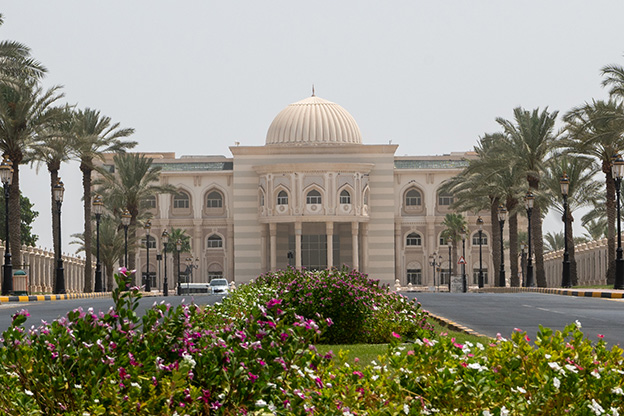
December 10–12, 2026 | American University of Sharjah


CALL FOR PAPERS
The conference theme highlights how global uncertainty and market fragmentation are reshaping the way firms compete, lead and adapt. Organizations must rethink strategy, build adaptive capabilities and foster resilient leadership to navigate complex, dynamic environments. This conference invites rigorous research that examines how firms anticipate change, reconfigure resources and design strategic responses that sustain performance across diverse international contexts, reflecting the intellectual mission of the Academy of International Business (AIB).
The MENA region, with its distinct combination of emerging markets, innovation hubs and regional connectivity, provides a critical context for exploring these challenges. Firms and leaders in the region are experimenting with new strategic approaches, organizational models and leadership practices to respond effectively to uncertainty while creating opportunities for growth and value creation. In line with the objectives of the AIB-MENA Chapter, the conference encourages contributions that advance knowledge on strategy, leadership and organizational resilience in a rapidly evolving international business landscape.
It brings together scholars and practitioners of international business to delve deeper in conversations on how regional firms navigate a fractured and uncertain global environment. The event provides a forum for rigorous dialogue, knowledge exchange and the development of insights that inform both theory and practice in international business and related fields.
The conference welcomes original research that explores different international business and management topics pertinent to the conference themes as well as proposals for panel discussion sessions aimed at generating dialogue that is thought-provoking and educational for international business scholars and practitioners. Submissions that concentrate on the MENA region, have significant implications for it or stimulate discussions, collaboration and innovation in advancing regional sustainability agenda are especially encouraged.
Conference Co-Chairs
Conference Co-Chairs:
-
Professor Virginia Bodolica, American University of Sharjah
-
Dr. Saneesh Edacherian (Academy of International Business-MENA, Vice-Chair Program), UAE
Conference Organizing Committee:
-
Dr. Hasnan Baber, American University of Sharjah
-
Dr. Ilir Hajdini, American University of Sharjah
-
Dr. Atilla Onuklu, American University of Sharjah
-
Professor Yama Temouri (Academy of International Business-MENA Chapter Chair), United Arab Emirates University
.jpg)
Submission Guidelines
The conference accepts both fully-developed research papers and short papers (case study, conceptual paper, technical paper, literature review, research note or works-in-progress, which typically includes introduction, methods and expected results/contributions). Fully-developed papers must be fewer than 10,000 words and short papers (or extended abstracts) fewer than 8,000 words inclusive of all material, including references and appendices. All submissions must include an abstract (Max. 150 words).
All submissions must have a clear international business/management focus.
All submissions must be in English and in PDF or MS Word.
All submissions must be made through our official online submission portal, which will be made available mid-July.
The submission must provide an overview of the main issue(s) addressed, including the significance of the related contributions (Max. 1500 words), presentation titles and short abstracts if relevant (Max. 100 words) and all participants’ affiliation and contact information.
All submissions must have a clear international business/management focus.
All submissions must be in English and in PDF or MS Word.
All submissions must be made through our official online submission portal, which will be made available mid-July.
- One overall best paper award
- One best paper on conference theme
- One best methodology paper
- One best doctoral student paper award
To be eligible for doctoral student paper award, the paper needs to be 1) first authored and presented by a doctoral student and 2) not yet accepted/published in a journal.
Submit Your Work

Conference Tracks
Track Co-Chairs:
Dr. Loughlin Sweeney, Yonsei University in Seoul, South Korea
Dr. Bilal Ahmad Pandow, Bahrain Polytechnic, Kingdom of Bahrain
Keywords: Sustainability Development Goals (SDGs); Sustainable Global Value Chains (GVCs); responsible business; Corporate Social Responsibility (CSR); wicked problems; business ethics; value co-creation, stakeholders; sustainable human resources; circular economy; digital sustainability; environmental sustainability; green development; pollution; climate change, social and/or environmental externalities; energy transition; inequality; social welfare; social innovation; human rights.
Track Co-Chairs:
Dr. Hajar Fatorachian, Leeds Beckett University, UK
Prof. Katerina Nicolopoulou, Ajman University, UAE
Keywords: Knowledge governance; knowledge sharing; international R&D; R&D strategy and management; management of innovation; reverse innovation; open innovation; innovation networks; national innovation systems; innovation clusters; information technology; digital technology; digital platform; international technology strategy; reverse technology transfer; technology transfer; replication and imitation; appropriability regimes; inventor mobility; patenting strategy; local embeddedness; cross-border connectivity; internet; big data; analytics.
Track Co-Chairs:
Dr. Alex Wollenberg, Khalifa University, UAE
Prof. Fauzia Jabeen, United Arab Emirates University, UAE
Keywords: Institutions; institutional environment; institutional voids; institutional disruptions; institutional change; government; political environment; legal environment; international business policy; nonmarket strategy; corporate political activity; political strategies; corporate diplomacy; social sustainability; supranational governance; regional integration; trade agreements; trade disputes; uncertainty; volatility; social license; country risk; political risk; disaster risk; societal impact; social movements; rule of law; government intervention; protectionism; trade barriers; foreign trade zone; subsidies and incentives; global governance; instability; migration; poverty; protectionism; stakeholders; US-China rivalry; geopolitics.
Track Co-Chairs:
Dr. Ausrine Silenskyte, University of Vaasa, Finland
Dr. Bronwyn Wood, United Arab Emirates University, UAE
Keywords: Diversity, Equity and Inclusion (DEI); belonging; DEI business cases; the link between DEI and corporate strategy; microfoundations of DEI; DEI and social entrepreneurship; DEI and non-government organizations (NGOs); diffusion of DEI practices; standardization-localization of DEI practices; regional, national and sub-national differences in DEI practices; DEI practices and policies in emerging markets; DEI and institutional (de)evolution; social identity; identity intersectionality; social construction of differences and inequalities; discrimination; performativity; inclusiveness; representation; advocacy; social justice; diversity and creativity; double-edged sword of diversity; race; ethnicity; social class; religion; gender and gender identity; gender roles; gender and language; gender equality and equity; gender-based leadership differences; gender and internationalization; women in the multinational organization; gender relations at work; gender and entrepreneurship; gender and innovation; gender and the SDGs; intersectionality of gender, race and other social identities; gendered networks; gender fatigue; gender and social movements; gender-related international business policy.
Track Co-Chairs:
Prof. Annibal Scavarda, Federal University of the State of Rio de Janeiro, Brazil
Dr. Marcio Amaral-Baptista, University Mohammed VI Polytechnic, Morocco
Keywords: Global strategy; globalization of services; growth strategies; competitive strategy; global value chains; global production networks; global operations; global sourcing; outsourcing; offshoring; geography of IB activities; relocation of production; reshoring; mergers and acquisitions; joint ventures and alliances; entry modes; location strategy; parent-subsidiary relationships; foreign subsidiary management; MNE performance; organizational learning; organizational culture; boundary spanning; organizational change and development; organizational structure; organization of international operations; organizational capabilities; strategy implementation.
Track Co-Chairs:
Prof. Galina Shirokova, HSE-University Saint Petersburg, Russia
Dr. Raihan Taqui Syed, United Arab Emirates University, UAE
Keywords: International entrepreneurship; social entrepreneurship; SMEs; family businesses; regionalization vs. globalization; global strategy in family firms; liability of foreignness; entrepreneurial networks; SME exporters/importers; international new ventures; born-global firms; born-digital firms; opportunity discovery; opportunity exploitation; entrepreneurial internationalization; opportunity entrepreneurship; international entrepreneurial orientation; internationalization process; foreign entry modes and SMEs; speed of internationalization; innovation and entrepreneurship; spin-offs; entrepreneurship in education sector.
Track Co-Chairs:
Dr. María Fernández Muiños, University of León, Spain
Prof. Melodena Stephens, Mohammed Bin Rashid School of Government, UAE
Keywords: Experiential learning; developing an IB curriculum; internationalizing the business school; multidisciplinary teaching; cross-cultural classrooms; critical perspectives; case teaching; executive education; role of international experience; simulations and role-playing; blended learning; hybrid teaching; multimedia in IB teaching; IB teaching tools; travel Abroad; global virtual exchange; Collaborative Online International Learning (COIL); management of IB education; management of educational markets; competences for teaching IB; future of IB education; teaching Sustainability; education for sustainability; DEIB and teaching and learning; IB and education.
Track Co-Chairs:
Dr. Ha-Phuong Luong, University of Reading, UK
Dr. Vidya Panicker, Loughborough University, UK
Keywords: International finance and taxation; Transfer pricing; corporate malfeasance; accounting standards and conventions; non-financial accounting standards; non-financial reporting standards; international financial reporting; valuation; capital structure; financial risk management; macroeconomic risk management; global risks; exchange rate exposure; international financial integration; international cross-listing; ownership structure; institutional investors; state ownership; family ownership; shareholder activism; business groups; board diversity; board processes and effectiveness; directorship interlocks; CEO turnover; CEO-board dynamics; firm-stakeholder relationships; stakeholder activism; shareholder rights protections; management compensation; institutional investors; mutual funds; pension funds; international private equity; sovereign wealth funds; international venture capital; international hedge funds; international crowdfunding; sustainable finance; fintech; financial inclusion; financial literacy; green finance; Islamic finance.
Track Co-Chairs:
Prof. Stavroula Spyropoulou, University of Leeds, UK
Prof. George Christodoulides, American University of Sharjah, UAE
Keywords: Cross-cultural marketing; international marketing; global marketing; advertising; pricing; marketing channels; distribution channels; products/services; standardization/adaptation; brand management; consumer behaviour; customer relationships; customer experience; cross-cultural consumer behaviour; country-of-origin effects; consumer animosity; consumer well-being; digital marketing; social media marketing; global retailing; professional services marketing; B2B marketing; relationship marketing; technology-driven marketing/technology marketing; entrepreneurial marketing; sustainable marketing; green marketing; marketing to governments; market targeting; segmentation.
Track Co-Chairs:
Prof. Shumaila Yousafzai, Nazarbayev University, Kazakhstan
Dr. Salma Raheem, University of Doha for Science and Technology, Qatar
Keywords: Cross-cultural management; international human resource management; comparative human resource management; cross-cultural leadership; international leadership; expatriate management; human resource management and institutions; human resource management and culture; expatriate management; international staffing; international compensation; international careers; cultural diversity; cross-cultural communication; cross-cultural adjustment; multicultural teams; international virtual teams; intercultural competences; cultural intelligence; international teams; multi-cultural identity; international migration; international mobility; diasporas; returnees; international work-family issues; cross-cultural values and practices; ethics across cultures.
Track Co-Chairs:
Dr. Sadaf Khurshid, University of Wollongong in Dubai, UAE
Prof. Kimberly Gleason, American University of Sharjah, UAE
While the conference encourages submissions to the specific tracks listed above, it is also open to submissions outside the scope of these specific tracks. For example, papers that aim to develop methodological or theorizing approaches for international business research or papers in the field of international business history are welcome.
Key Dates
Submission deadline for papers, panel proposals and professional development workshops: September 4, 2026
Decision notification: September 4, 2026 onwards
Early-bird registration deadline: October 20, 2026
Presenter registration deadline: November 22, 2026
Standard registration deadline: November 30, 2026
Conference dates: December 10-12, 2026
Registration
All conference participants and attendees must register for the conference and pay the applicable AIB (Academy of International Business) member registration fees.
Regular AIB member rates:
-
Early-bird rate (20 October 2026) – US$ 290
-
Standard rate (22 November 2026) – US$ 390
-
Late rate (9 December 2026) – US$ 450
-
Onsite rate (10-12 December 2026) – US$ 500
Student and low-income AIB member rates:
-
Early-bird rate (20 October 2026) – US$ 250
-
Standard rate (22 November 2026) – US$ 290
-
Late rate (9 December 2026) – US$ 330
-
Onsite rate (10-12 December 2026) – US$ 370
An active AIB membership is required to register for the conference. AIB membership applications usually take 1-2 business days to process; early applications are encouraged to avoid unexpected delays. To become an AIB member, click here.
For additional details about AIB membership rates (including discounted rates for low- and lower-middle income countries and students) and benefits of becoming an AIB member, click here.
Recommended Hotels
Conference Queries
For conference related queries, please email both: AIB-MENA2026@aus.edu and mena@aib.msu.edu.
About the Host

American university of Sharjah (AUS) is a comprehensive, independent, non-profit, coeducational institution of higher education that promotes excellence in teaching, learning, research and creative work. It fosters a community that celebrates diversity and whose members are committed to the ideals of open intellectual inquiry, ethical behavior and civic responsibility. AUS has achieved its highest-ever position in the QS World University Rankings, rising to 258 globally in the 2027 edition. This places AUS among the top 17 percent of universities ranked by QS worldwide, among the top three universities in the UAE and first in the UAE for employer reputation.
AUS is licensed and its degree programs are accredited by the Commission for Academic Accreditation of the UAE Ministry of Higher Education and Scientific Research. Additionally, AUS has been accredited in the USA by the Middle States Commission on Higher Education since June 2004. In addition to the School of Business Administration, the university includes the College of Engineering, the College of Arts and Sciences, and the College of Architecture, Art and Design, serving more than 6,000 students from approximately 100 nationalities. The university curricula, teaching standards and employment norms are fully in tune with the American model of higher education. The AUS campus is in Sharjah’s University City, adjacent to Sharjah International Airport, only 35 minutes away from Downtown Dubai and 20 minutes away from Dubai International Airport.
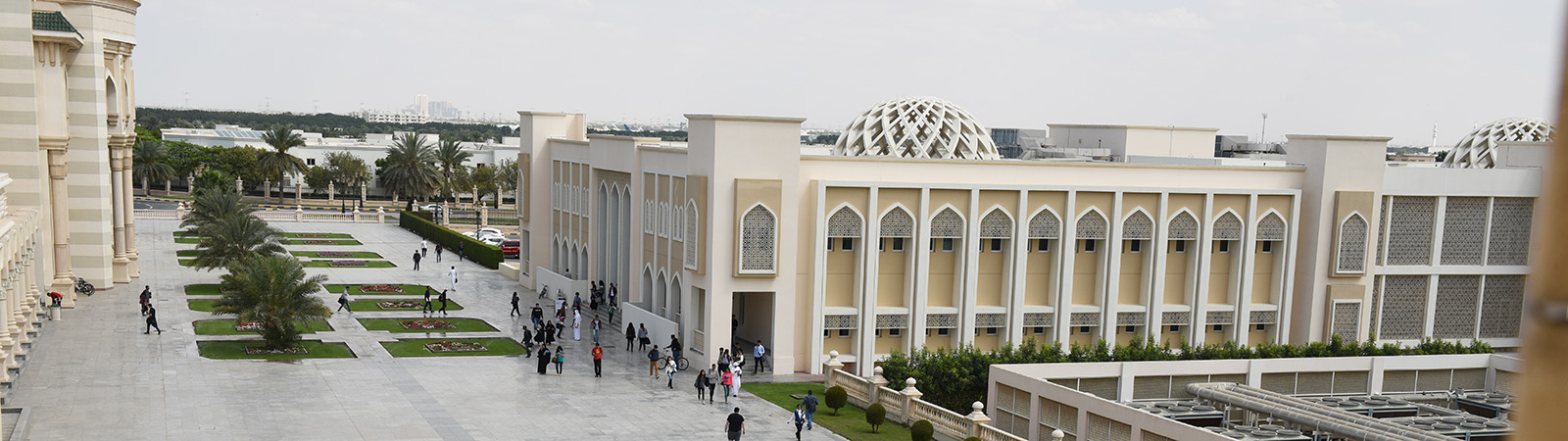
The School of Business Administration (SBA) enrolls over 1,900 undergraduate and graduate students. QS World University Subject Rankings (2026) has ranked AUS first in the UAE (tied) and among the top 250 universities globally for accounting and finance, third in the UAE and among the top 300 universities globally for business and management studies, and third in the UAE and top 400 universities globally in the category of economics and econometrics. The AUS MBA program is ranked second in the UAE, seventh (tied) in the Middle East and Africa region, and among the world's top 200 in the QS Global MBA Rankings (2026).
The school offers a Bachelor of Science in Business Administration degree with majors in accounting, economics, finance, information systems and business analytics, management, marketing and supply chain management, as well as a Bachelor of Arts in Economics. Graduate degrees include the Master of Business Administration, Master of Business Data Analytics, Master of Science in Accounting, Master of Science in Economics and Policy, Master of Science in Finance, PhD in Finance and PhD in Management. The school has been accredited by the Association to Advance Collegiate Schools of Business (AACSB) since April 2011.
SBA hosts four different research chairs and professorships, which contribute to different areas of business research including international business. These chairs are The Said T. Khoury Chair of Leadership Studies, the Sheikh Saoud Bin Khalid Bin Khalid Al Qassimi Chair in Family Business, the Chalhoub Group Professor of Luxury Brand Management and the Bank of Sharjah Chair in Finance, with the former two chairs being hosted by the Department of Management, Strategy and Entrepreneurship.
About the Department of Management, Strategy and Entrepreneurship

The Department of Management, Strategy and Enterpreneurship (MS&E) comprises a diverse group of 17 full-time faculty members who come from 16 countries and is gender balanced. MS&E department faculty are specialists and researchers in a broad variety of management topics. Their research has been published in top management journals, such as the Academy of Management Annals, Entrepreneurship Theory and Practice, International Journal of Project Management, Journal of Management Studies, Journal of World Business and Strategic Management Journal. The work in progress of the department’s faculty is regularly being presented at leading scholarly conferences in the field, including the global Academy of Management and its regional affiliated and associated societies, and the global Academy of International Business and its regional chapter conferences.
About Sharjah

UAE is home to more than 10 million people from over 200 nationalities. Sharjah is the third most populous of the UAE’s seven emirates after Dubai and Abu Dhabi. Sharjah is widely regarded as a center of culture and education and serves as home to an industrious and dynamic population. Like the UAE, Sharjah provides a safe and comfortable environment that offers easy access to the UAE’s many beaches, the Hajar Mountains and a multitude of leisure establishments, all within a short driving distance. Given the country’s location and robust transportation infrastructure, travel to Asia, Africa and Europe is easy.
Sharjah takes facilitating work-life balance seriously as is evidenced by it having instituted a four-day workweek. Signature annual events include Sharjah International Book Fair—one of the largest book fairs globally; Sharjah Light Festival, which is a spectacular celebration of light and art; Sharjah Biennial, a premier platform for contemporary art in the region; and Tanweer Festival, which celebrates creative expression, featuring immersive art installations, performances and discussions that highlight innovation in the arts and culture.